
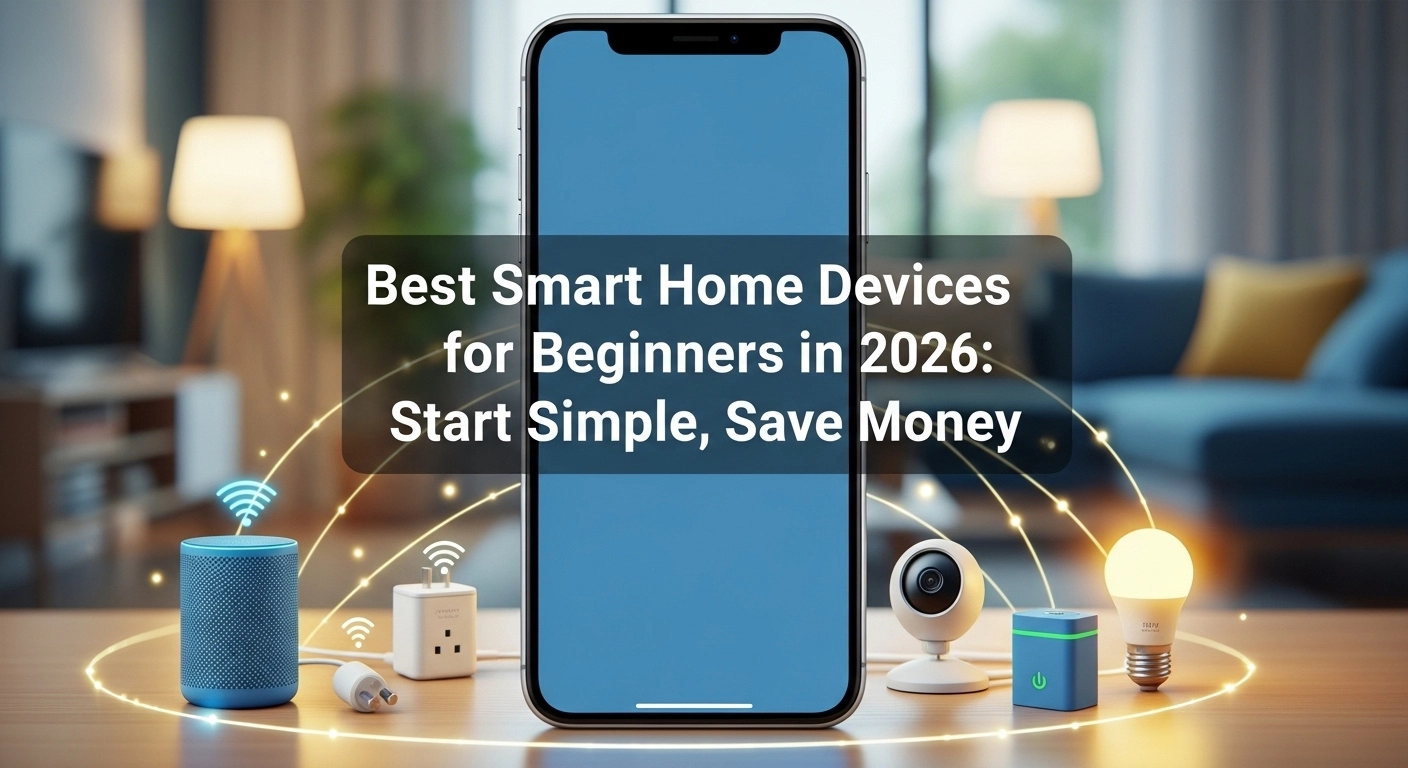
Smart homes used to be the preserve of tech enthusiasts with soldering irons and infinite patience. Not any more. In 2026, setting up a smart home is closer to plugging in a kettle than rewiring your house. You can add real comfort, security and energy savings with a handful of gadgets, even if your technical skills stop at resetting the Wi-Fi router.
Thank you for reading this post, don't forget to subscribe!The trick is not to buy everything at once. This guide walks through the best devices for beginners, what each one actually does for you, and the order to add them. Follow it and you will have a modest, genuinely useful smart home without ever feeling overwhelmed or overspent.
Start With a Smart Speaker or Display
Every smart home needs a central voice assistant. For most people in the UK, that means either Amazon Echo, Google Nest or Apple HomePod, depending on which phone ecosystem you already live in. Echo has the largest range of compatible devices. Google is great for searches and answers. Apple is best if your household is mostly iPhone users.
A smart display like an Echo Show or Google Nest Hub adds a screen for video calls, recipes and doorbell feeds. It is the single most useful first purchase because it becomes the hub through which every other device is controlled by voice. Budget around $60 to $150 depending on size.
Add Smart Plugs for Instant Magic
Smart plugs are the cheapest and easiest upgrade in the whole smart home world. You plug one into a wall socket, then plug your lamp, coffee machine or heater into the smart plug. From then on, you can schedule them, control them by voice and switch them on and off from your phone.
A pair of smart plugs costs less than $20 on a good sale. They let you automate your lamps to come on at sunset, your coffee machine to start brewing before you get out of bed, or your electric heater to warm up the living room just before you come home. This one gadget sells more people on smart homes than any other.
Upgrade to Smart Bulbs or Smart Switches
Smart bulbs like Philips Hue, Ikea Tradfri or Govee are the next natural step. They let you change brightness and colour, set routines, and control each bulb individually. If you want to go further, smart wall switches replace your existing light switches and turn every bulb connected to them into a schedulable light.
Switches tend to be cheaper in the long run for whole-house lighting, but they are a bit more work to install and may need an electrician. Bulbs are cheaper to start and require nothing except screwing them in. For beginners, one room’s worth of bulbs is a perfect experiment.
Smart Thermostat for Real Energy Savings
Of all the smart home gadgets, a smart thermostat is the one that actually pays you back. Devices like Google Nest, Hive and Tado learn your routines and automatically lower the heating when no one is in, or let you control the temperature from your phone on the way home. UK energy prices being what they are, many households save enough within a year to recoup the cost.
Installation is usually straightforward, but some older boilers need an engineer. Your energy provider may even fit a smart thermostat at a discount or for free as part of a tariff.
Smart Video Doorbell for Peace of Mind
A video doorbell like Ring, Nest Doorbell or Eufy lets you see who is at the door from your phone, whether you are upstairs or in another city. For anyone who misses parcels, works odd hours or just likes knowing who knocked, this is a game changer.
Look for a doorbell with local recording if you want to avoid monthly subscription fees. Eufy and Aqara both have strong options here. Some models run on batteries and connect wirelessly, which is brilliant if you rent or do not have wiring at the door.
Smart Security Camera for Indoors or Out
A simple indoor smart camera lets you check on pets, children or a delivery you are waiting on. Outdoor cameras add a layer of security without the cost of a full alarm system. Brands like Ring, Arlo, Reolink, Eufy and TP-Link Tapo all offer affordable options under $80.
Pay attention to privacy features. Some cameras store footage locally on a microSD card, others rely on cloud subscriptions. If you are uneasy about monthly fees or cloud privacy, pick a local-recording model.
Smart Lock for Keyless Living
A smart lock is a step up in commitment, but people who install one rarely go back. You can let a cleaner in remotely, give your teenager a code instead of a spare key, and get a phone alert whenever the door opens. Brands like Yale Linus, Nuki and SwitchBot offer models that fit over existing UK locks, so you do not have to drill.
Before you buy, check the lock is compatible with your door and that you are allowed to replace or modify it if you are renting. Many smart locks can be fully removed when you move out.
Smart Robot Vacuum for Time Back
Robot vacuums have become genuinely good in the last few years. Mid-range models like Eufy, Roborock and Roomba clean floors while you are at work and can be scheduled through your phone or voice assistant. For families and pet owners, the time they save adds up fast.
Look for a model with decent navigation, not just random bouncing. Maps, virtual walls and obstacle detection make a huge difference to how much human supervision the robot needs.
Choose an Ecosystem and Stick With It
A common beginner mistake is buying devices from five different brands and finding they will not play nicely together. Pick one hub, usually Alexa, Google Home or Apple Home, and prefer devices that support it. The new Matter standard helps a lot with cross-brand compatibility in 2026, but you still get the smoothest experience when most of your gear is built around the same app.
Final Thoughts
You do not need to fill your home with gadgets to feel the benefit of a smart home. A smart speaker, a couple of plugs, one clever thermostat and a video doorbell will change your daily routine more than you expect. Start small, focus on things that genuinely save time, money or worry, and grow your setup at your own pace. The best smart home is not the biggest one. It is the one you actually use every day without thinking about it.